
China’s high-pressure fan sector is expanding with industrial automation, infrastructure investment, and stricter energy-efficiency expectations. The International Energy Agency reports that electric motor systems consume roughly half of global electricity. Fan efficiency therefore deserves serious attention. In factories, a small pressure loss can become a large electricity bill.
A High Pressure Centrifugal Fan must deliver stable airflow against demanding resistance. Its performance depends on impeller geometry, motor efficiency, casing design, operating speed, and system matching. The U.S. Department of Energy’s Improving Fan System Performance sourcebook stresses that fan systems should be assessed through airflow, pressure, controls, and total operating cost. AMCA standards also provide essential guidance for performance testing and rating. These details matter on the factory floor, where dust, heat, vibration, and long operating hours quickly expose weak designs.
As fan-system engineer Ralph C. Wright wrote, “The fan is the heart of the air system.” That idea remains useful, although it is not a complete selection method. A strong manufacturer should provide tested curves, material details, noise data, efficiency figures, and practical after-sales support. Certification helps. It does not replace careful engineering.
This article introduces China’s top 10 High Pressure Centrifugal Fan manufacturers. The comparison considers product range, manufacturing experience, customization ability, testing capability, export performance, and application knowledge. Public data is not always consistent. Some rankings may change as evidence improves. That limitation deserves acknowledgment. Still, the selected companies offer a practical starting point for buyers comparing fans for cement plants, boilers, dust collection, chemical processing, and industrial ventilation.
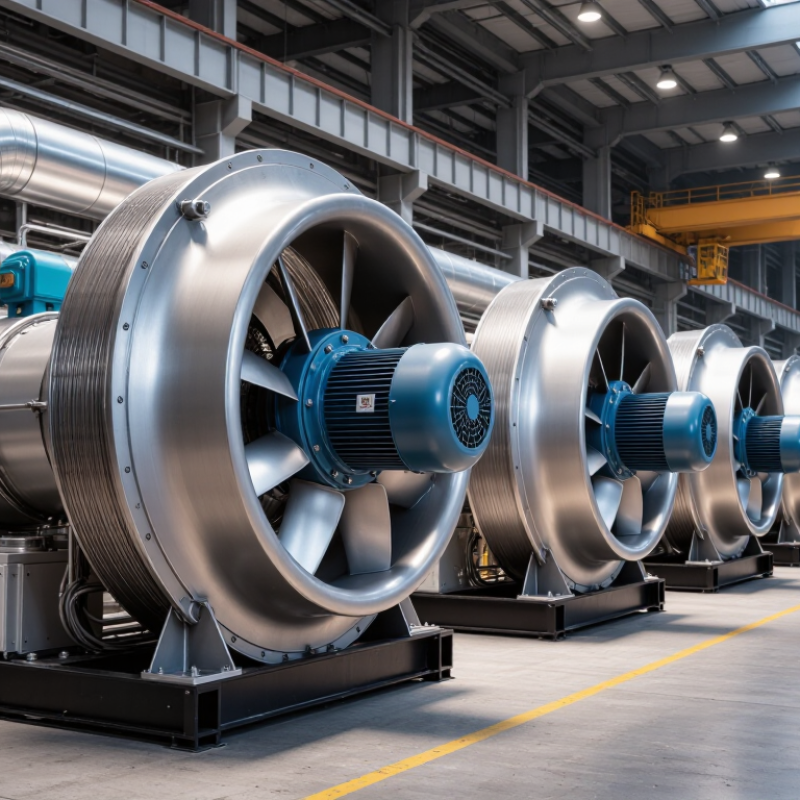
China’s high-pressure centrifugal fan manufacturing industry has grown with industrial automation, cleaner workshops, and stronger export demand. Manufacturers serve boilers, dust-collection systems, tunnel ventilation, drying lines, and process plants. Their main challenge is moving air against resistance without excessive noise, vibration, or energy loss. Pressure matters more than impressive airflow figures.
Factory experience shows that small details often decide long-term performance. Engineers check impeller balance, shaft alignment, casing strength, bearing temperature, and welding quality. They also compare operating curves with real system resistance, not only catalog data. A fan may perform well in testing but struggle after installation. Site conditions matter.
China’s top ten manufacturers should be assessed through engineering capability, production consistency, testing procedures, and after-sales communication. A reliable supplier can provide material records, performance data, maintenance guidance, and clear tolerance standards. It should also explain how the fan handles dust, heat, moisture, or continuous operation. Some suppliers still present incomplete noise or efficiency data. That weakness deserves attention.
Buyers should review factory inspection records and request practical references from similar applications. Energy consumption over several years can outweigh the initial purchase price. Customization is useful, but unnecessary modifications may increase risk and delay delivery. Skilled manufacturing is visible in stable welds, precise balancing, clean assembly areas, and technicians who discuss limitations honestly.
Ranking China’s top ten high pressure centrifugal fan manufacturers requires more than comparing catalog numbers. The central test is whether published performance survives independent verification. I would examine airflow, static pressure, efficiency, noise, and vibration at defined operating points. Each result should match a traceable test report. Vague curves weaken confidence. Quickly.
Factory experience matters during evaluation. A site audit should inspect impeller balancing, weld quality, steel thickness, bearing protection, and motor alignment. Small defects can create serious vibration after continuous operation. I would also review production records, inspection tools, and corrective action reports. These details reveal manufacturing discipline better than polished brochures.
A practical scorecard could assign 30% to verified performance, 20% to product quality, and 15% to engineering capability. The remaining points should measure delivery reliability, customization, service response, safety documentation, and customer references. Independent laboratory data deserves more weight than self-reported claims. However, this method is not flawless. Smaller manufacturers may lack expensive testing facilities while producing dependable equipment. That limitation requires careful judgment, repeated sample checks, and direct technical interviews. A ranking should remain adjustable when new evidence appears.
This evaluation framework ranks manufacturers by the factors most relevant to high-pressure centrifugal fan procurement: technical performance, production capability, quality control, export and service capacity, and application coverage. The weighting totals 100% and is intended for comparative supplier assessment rather than representing any individual company’s result.
China’s leading high-pressure fan manufacturers serve cement, metallurgy, power generation, chemicals, and dust-control systems. Their profiles should be judged beyond production scale. Engineering depth matters more. The strongest factories typically provide airflow calculations, impeller balancing, vibration testing, and site commissioning. They also adapt designs for high-temperature gas, abrasive particles, and continuous operation.
The International Energy Agency reports that motor-driven systems consume nearly half of global electricity. This makes fan efficiency a serious operating concern. China’s top ten manufacturers commonly highlight backward-curved or airfoil impellers, variable-frequency control, and optimized inlet geometry. Some offer pressure ranges above 10 kPa, although actual performance depends on gas density, temperature, and duct resistance. Testing under standard conditions can mislead buyers.
Reliable profiles should include factory testing, ISO 9001-based quality procedures, and compliance with applicable AMCA 210 or ISO 13349 measurement principles. Heavy-duty manufacturers often use welded steel housings, wear-resistant liners, and dynamically balanced rotors. Others focus on compact units for boilers or clean industrial ventilation. The differences are practical, not cosmetic.
A careful buyer should request performance curves, sound data, bearing-life calculations, and spare-parts support. Certification alone proves little. Site evidence matters more. One weakness remains: published efficiency figures are not always directly comparable. Installation quality can erase impressive laboratory gains, especially when filters clog or ducts leak.
China’s leading high pressure centrifugal fan manufacturers differ mainly in impeller design, motor matching, and testing discipline. Backward-curved impellers usually provide higher efficiency and steadier airflow. Forward-curved designs can deliver compact installation, but often consume more power at higher pressure. Airfoil blades reduce turbulence when the system is carefully balanced. Small details matter.
Performance should be compared through measured airflow, static pressure, efficiency, vibration, and sound levels. A reliable supplier should provide test conditions, not only attractive catalog values. ISO 5801 laboratory data can support fair comparison, while field measurements reveal duct losses and filter resistance. Noise matters. A fan rated at 8,000 Pa may perform poorly if its outlet transition is too restrictive. I have seen pressure readings change noticeably after a sharp elbow.
Application requirements separate the top ten candidates. Steel plants may need robust housings and heat-resistant components. Dust collection systems require sealed bearings and accessible cleaning points. Tunnel ventilation prioritizes continuous operation, surge protection, and maintenance access. Food-processing projects may demand smoother surfaces and corrosion-resistant materials. No supplier is perfect. Some published efficiency figures depend on ideal conditions and may not reflect seasonal operation. Buyers should request performance curves, balancing records, motor efficiency data, and warranty terms before selection. A quieter fan is not always the best fan. The correct choice balances pressure stability, energy use, durability, and practical service access.
| Rank | Manufacturer Profile | Primary Fan Technology | Typical Airflow Range (m³/h) |
Pressure Range (kPa) |
Typical Total Efficiency |
Maximum Gas Temperature |
Drive Configuration | Key Applications | Typical Compliance and Testing |
|---|---|---|---|---|---|---|---|---|---|
| 1 | Manufacturer 01 | Single-inlet backward-curved impeller with aerodynamic blade profiling | 8,000–220,000 | 1.5–7.5 | 80–86% | Up to 80°C standard | Belt drive or direct drive; variable-frequency control available | HVAC air handling, clean-room ventilation, industrial exhaust | Performance testing commonly referenced to GB/T 1236 or AMCA 210 |
| 2 | Manufacturer 02 | Double-inlet backward-inclined impeller for high-volume air movement | 20,000–450,000 | 1.2–5.5 | 82–88% | Up to 80°C standard | Double-width shaft-mounted motor or belt drive | Large air-handling units, factories, warehouses, power auxiliaries | Factory balancing typically performed to ISO 21940 principles |
| 3 | Manufacturer 03 | High-pressure backward-curved impeller with reinforced welded housing | 3,000–80,000 | 4.0–12.0 | 78–85% | Up to 120°C standard; higher with upgrades | Belt drive with isolated bearing assembly | Combustion air, pneumatic conveying, dust collection, process lines | Pressure and airflow curves generally verified by laboratory testing |
| 4 | Manufacturer 04 | Direct-drive plug fan with backward-curved blades and compact casing | 1,000–35,000 | 1.5–6.0 | 75–83% | Up to 60°C standard | Direct drive with variable-frequency drive or EC motor option | Air-conditioning units, filtration systems, heat recovery equipment | Motor efficiency and electrical safety assessed to applicable IEC requirements |
| 5 | Manufacturer 05 | Heavy-duty induced-draft fan with abrasion-resistant impeller options | 20,000–300,000 | 2.0–8.0 | 80–87% | Up to 250°C standard configuration | Belt drive with water-cooled or high-temperature bearing options | Boilers, kilns, incinerators, thermal processing systems | Dynamic balancing and casing pressure tests used for heavy-duty assemblies |
| 6 | Manufacturer 06 | FRP or coated centrifugal fan for corrosive-gas service | 2,000–60,000 | 0.8–4.0 | 70–80% | Up to 60°C for standard FRP construction | Direct or belt drive with corrosion-isolated components | Chemical processing, laboratory exhaust, wastewater treatment, plating lines | Material compatibility and corrosion-resistance checks required for each medium |
| 7 | Manufacturer 07 | Radial-blade dust-handling fan with replaceable wear liners | 5,000–120,000 | 3.0–10.0 | 68–78% | Up to 200°C standard configuration | Belt drive with reinforced shaft and high-load bearings | Cement, mining, biomass, grain processing, wood and mineral dust removal | Wear, vibration, and balance inspections are essential for particulate service |
| 8 | Manufacturer 08 | Boiler forced-draft and induced-draft centrifugal fan systems | 30,000–500,000 | 2.0–10.0 | 82–90% | Up to 250°C standard; higher with cooling systems | Heavy-duty belt drive or variable-speed direct coupling | Power generation, industrial boilers, steel production, district heating | Performance acceptance commonly follows GB/T 1236, ISO 5801, or project specifications |
| 9 | Manufacturer 09 | Large-volume axial-radial ventilation package with low-noise blade geometry | 50,000–700,000 | 0.8–4.5 | 80–88% | Up to 80°C standard | Direct drive or belt drive with sound attenuation options | Tunnels, underground facilities, metro systems, large industrial buildings | Noise, vibration, and emergency-operation tests specified by project standards |
| 10 | Manufacturer 10 | Compact high-pressure centrifugal fan with multi-speed or inverter operation | 500–15,000 | 3.0–15.0 | 72–82% | Up to 80°C standard | Direct drive, integrated motor, or compact belt drive | Burners, welding fume extraction, laboratory systems, compact process equipment | Electrical, mechanical, airflow, and vibration checks completed according to the selected project standard |
| Note: The performance figures shown are representative engineering ranges for Chinese high-pressure centrifugal fan product categories. Actual airflow, pressure, efficiency, temperature, noise, and material limits depend on fan size, speed, gas density, impeller design, operating point, and project configuration. Final selection should be confirmed using the manufacturer’s certified performance curve and application data. | |||||||||
Choosing among China’s top 10 high pressure centrifugal fan manufacturers requires more than comparing prices. A reliable supplier should match airflow, static pressure, temperature, noise, and duty-cycle requirements. The U.S. Department of Energy identifies fan systems as a major industrial motor load, often approaching 20% of motor electricity use in assessed facilities. Efficiency deserves attention.
Request a performance curve for your exact operating point. Ask whether testing follows ISO 5801 or AMCA 210 procedures. Check impeller balance, vibration readings, bearing life, motor efficiency, and pressure tolerance. A serious factory should provide test records, material certificates, inspection photos, and traceable serial numbers. Factory acceptance testing is useful. It is not optional for critical systems.
Review production evidence, not polished brochures. Visit the workshop, or arrange an independent inspection. Look for calibrated instruments, controlled welding, dynamic balancing, and documented quality checks. The International Energy Agency estimates that electric motor systems consume roughly half of global electricity, making lifecycle efficiency commercially important.
I would also examine spare-part availability and technical response times. A low quotation can hide weak seals, unstable bearings, or expensive downtime. That mistake is common.
Do not accept “customized” as a complete answer. Require drawings, duty conditions, guarantees, and commissioning responsibilities in writing. Supplier selection remains imperfect. Even experienced buyers can overlook installation losses or changing process conditions. Recheck the design before payment.
Compare static pressure, airflow, efficiency, vibration, noise, temperature, and duty cycle. Pressure stability matters more than impressive airflow figures. Check the complete operating curve.
Duct losses, sharp elbows, restrictive outlets, filters, and changing process conditions can reduce performance. Site conditions matter. Installation is not a small detail.
Backward-curved impellers often provide higher efficiency and steadier airflow. Forward-curved designs may save space but consume more power under high pressure. Airfoil blades can reduce turbulence when balanced correctly.
Request performance curves, balancing records, vibration readings, material certificates, inspection photos, and traceable serial numbers. Ask for testing conditions. Catalog data alone is incomplete.
Look for clean assembly areas, stable welds, calibrated instruments, and documented quality checks. Dynamic balancing deserves close attention. Weak records may indicate weak control.
Dust systems need sealed bearings, strong housings, accessible cleaning points, and suitable materials. Ask how dust affects maintenance intervals. Dust always finds weak seals.
Electricity costs can exceed the initial equipment price over several years. Review motor efficiency, operating hours, and expected pressure losses. A cheaper fan may become expensive later.
No. Necessary modifications can improve application fit, but unnecessary changes may increase risk and delay delivery. Require drawings, guarantees, and responsibilities in writing.
Recheck the duty point, installation losses, temperature, noise limits, spare parts, warranty terms, and commissioning plan. Arrange factory acceptance testing for critical systems. I might still miss a changing process condition.
China has developed a strong manufacturing base for high-pressure air movement equipment, supported by advanced metal processing, motor technology, airflow testing, and increasingly efficient production systems. This article examines the development of China’s High Pressure Centrifugal Fan industry and explains the key criteria used to evaluate leading manufacturers, including product quality, pressure performance, energy efficiency, customization capabilities, certifications, delivery reliability, and after-sales support.
It also presents profiles of ten representative Chinese manufacturers without focusing on brand promotion, comparing their product technologies, operating performance, structural designs, noise control, and suitability for applications such as industrial ventilation, dust removal, boiler systems, drying equipment, and process cooling. Finally, the article offers practical guidance for selecting a dependable supplier by reviewing technical documentation, testing standards, material quality, production capacity, service responsiveness, and long-term cooperation potential. This overview helps international buyers make informed decisions when sourcing reliable, efficient, and application-specific high-pressure fan solutions from China.

Chiye Fan