
China has become a major source of industrial ventilation equipment, serving factories, warehouses, power plants, and commercial buildings worldwide. This guide explores the top 10 Centrifugal Fan manufacturers in China, focusing on practical performance rather than attractive product claims. The selected companies are considered through manufacturing experience, engineering capability, product range, export history, and customer support.
Real evaluation requires more than reading a catalog. A reliable comparison should examine airflow capacity, static pressure, motor efficiency, noise levels, vibration control, materials, and operating temperature. Factory certifications, testing procedures, quality records, and project references also deserve careful attention. These details matter when a fan must run continuously beside hot machinery or maintain stable ventilation in a dusty workshop.
A ranking is never perfect. Different applications require different solutions, and the largest supplier may not be the best fit for every project. Some manufacturers provide stronger customization, while others offer faster delivery or broader after-sales support. Buyers should request performance curves, inspection reports, warranty terms, and sample test results before making a decision. This article aims to provide a clear starting point, supported by industry-focused criteria and realistic purchasing considerations. Where public information is limited, that limitation should be recognized instead of hidden. Good equipment selection takes careful verification, not confident assumptions.
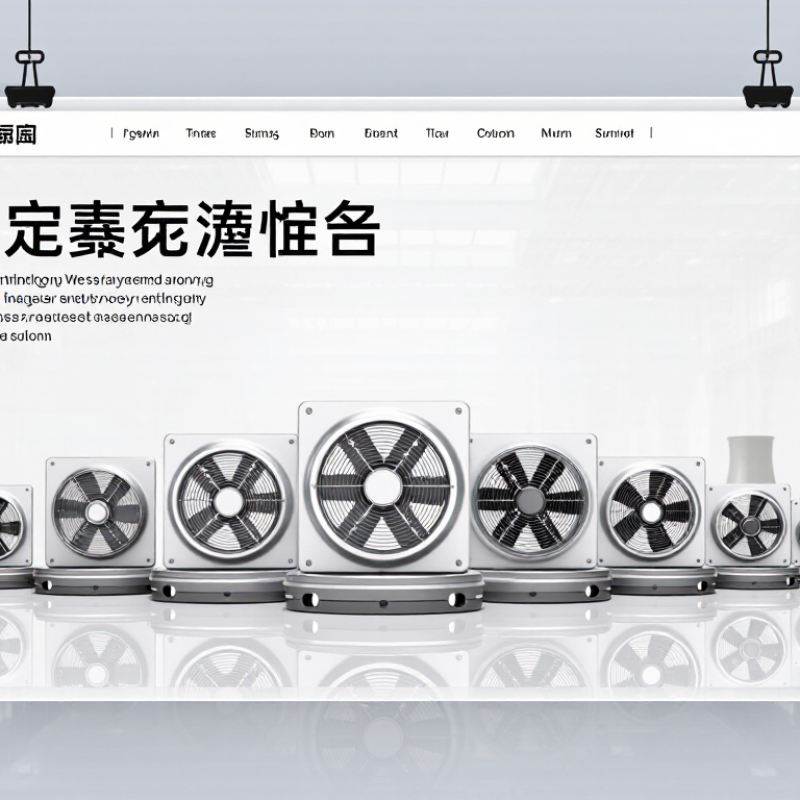
A centrifugal fan is a mechanical device that moves air through rotating impeller blades. Air enters near the shaft and leaves radially under centrifugal force. The housing then converts part of that velocity into useful pressure. Unlike axial fans, centrifugal models handle higher resistance in ducts, filters, and process equipment.
In factories, these fans support ventilation, dust collection, combustion air, drying, and equipment cooling. A cement workshop may use one to pull abrasive dust through a filter system. A food-processing line may need controlled airflow around ovens and cooling tunnels. In each case, stable pressure matters as much as airflow volume.
Selecting a suitable unit requires more than comparing motor power. Engineers should check airflow, static pressure, temperature, gas composition, noise, materials, and operating hours. Impeller balance and bearing protection also influence service life. Regular vibration checks can reveal misalignment before it damages the motor or housing. Small details matter.
A practical evaluation of Chinese manufacturers should examine testing records, production controls, technical drawings, and after-sales support. Factory inspection can expose gaps that brochures hide. A fan may appear correctly sized on paper, yet perform poorly after duct resistance changes. This is a common weakness. Better selection includes measured system data, not assumptions. Engineers should also question whether laboratory efficiency matches real operating conditions.
When comparing the top 10 centrifugal fan manufacturers in China, a ranking alone can mislead buyers. Real selection starts with measurable evidence. In practical sourcing, request airflow curves, pressure data, efficiency figures, and noise readings for the exact model. Do not rely on general catalog values. A reliable manufacturer should provide test conditions, instrument details, and clear performance tolerances.
Factory capability matters as much as product design. Check whether the manufacturer performs impeller balancing, motor testing, vibration checks, and coating inspections in-house. Visit the production site when possible. Look for clean assembly areas, traceable materials, calibrated equipment, and documented quality procedures. Certifications can support credibility, but they should match the product and current production scope. A certificate alone proves little. That is an easy mistake.
Technical support separates serious suppliers from simple exporters. Evaluate their response time, drawing accuracy, customization process, spare-parts availability, and installation guidance. Ask how they handle airflow changes, high-temperature environments, dust exposure, and continuous operation. Their engineers should explain pressure losses in plain language. Vague answers deserve caution.
Cost still matters, but the lowest quotation may hide thinner steel, weaker bearings, or limited testing. Compare total operating cost, energy consumption, maintenance intervals, warranty terms, and delivery consistency. Ask for recent project references with similar duties. Some manufacturers may offer excellent equipment yet struggle with documentation or after-sales communication. That weakness should be recorded, not ignored. Controls, safety guards, and electrical components also require careful verification before purchase.
The top ten centrifugal fan manufacturers in China are best assessed by evidence, not advertising. A practical shortlist should examine factory capacity, testing equipment, export history, and after-sales support. Public industry reports from Grand View Research estimate the global industrial fan market at over USD 6 billion in 2023, with steady growth through 2030. This demand is increasing pressure on Chinese suppliers to improve efficiency and documentation.
The leading ten manufacturers usually serve HVAC, dust collection, tunnel ventilation, and industrial drying projects. Their product ranges often include backward-curved, forward-curved, and high-pressure centrifugal fans. Buyers should compare airflow, static pressure, noise levels, vibration limits, and motor efficiency under the same test conditions. Small details matter. A poorly matched impeller can waste energy every hour. Some factories provide ISO-certified quality systems, balancing reports, and performance curves based on recognized testing methods. Others offer attractive prices but limited field data.
Real experience still exposes weaknesses. Catalog figures may not reflect dirty filters, unstable voltage, or high-altitude operation. That is where supplier judgment becomes important. The International Energy Agency reports that cooling-related electricity demand remains a major global concern, making fan efficiency more than a purchasing detail. A reliable ranking should therefore include measured performance, spare-part availability, delivery consistency, and technical communication. Ten suppliers may look similar online. They are not. Independent testing is still worth the cost.
China’s centrifugal fan market includes manufacturers with different strengths, not one universal leader.
Manufacturer 1 focuses on high-pressure fans for cement plants and dusty production lines.
Manufacturer 2 develops energy-saving backward-curved fans for commercial buildings.
Manufacturer 3 serves textile factories, where stable airflow protects sensitive processes.
Manufacturer 4 supplies corrosion-resistant equipment for chemical workshops. Its material selection deserves careful verification.
Manufacturer 5 is known for large industrial fans used in power and metallurgy projects.
Manufacturer 6 concentrates on compact ventilation units for kitchens, warehouses, and workshops.
Manufacturer 7 builds explosion-resistant solutions for controlled industrial environments, subject to project requirements and legal approval.
Manufacturer 8 emphasizes customized impellers, variable-speed control, and automated monitoring.
Manufacturer 9 supports tunnel and underground ventilation applications with strong air volume.
Manufacturer 10 targets general manufacturing with practical, cost-conscious fan packages.
Product strength is only part of the assessment. Noise, efficiency, balancing quality, sealing, maintenance access, and after-sales response also matter.
Tips: Request performance curves, material certificates, noise data, and motor efficiency records before purchasing. Ask for a factory test report, not only a catalog figure. Compare airflow at the actual system resistance. A cheaper fan may consume more power every day. Site visits can reveal assembly discipline, though they cannot prove long-term reliability. I have seen impressive samples fail during poor installation. This remains an overlooked risk. Check spare-part availability, warranty conditions, and commissioning support before signing a contract.
What Are the Top 10 Centrifugal Fan Manufacturers in China?
When comparing China’s top ten centrifugal fan manufacturers, supplier selection matters more than a simple ranking. IEA reports that electric motor systems use about 50% of global electricity. Fan efficiency therefore affects operating cost, not only purchase price. In my sourcing experience, reliable suppliers provide performance curves, noise data, motor efficiency classes, and material specifications. Ask for testing records from calibrated equipment. A polished brochure is not enough. Airflow should match your actual duct resistance, temperature, altitude, and duty cycle.
The U.S. Department of Energy estimates that industrial fan systems can consume 10% to 20% of facility electricity. This makes variable-frequency drive compatibility valuable. Check impeller balance, bearing life, weld quality, coating thickness, and spare-part availability. Request a sample inspection before mass production. Factory audits should review incoming materials, assembly controls, final testing, and traceability. Some suppliers promise tight tolerances, yet their reports remain vague. That deserves careful questioning.
Tips: Compare five suppliers using the same specification sheet. Verify airflow and pressure at the same operating point. Request an actual noise test, not a typical value. Confirm whether the quoted efficiency includes the motor, drive, and fan. Review warranty exclusions carefully. Delivery speed also matters, but it should not replace engineering evidence. One overlooked detail is after-sales communication. If technical answers arrive slowly before purchase, support may become weaker later.
This procurement model uses a normalized 100-point weighting system for comparing potential suppliers. Performance, energy efficiency, quality control, customization, compliance, delivery reliability, and after-sales support are key factors when evaluating centrifugal fan manufacturers.
The percentages represent recommended evaluation weights rather than rankings of individual companies. Buyers should verify test reports, ISO-certified quality processes, operating curves, material specifications, lead times, and service capabilities before making a final decision.
It moves air with rotating impeller blades. Air enters near the shaft and exits outward under centrifugal force. The housing converts velocity into pressure.
They support factory ventilation, dust collection, drying, combustion air, and equipment cooling. A cement workshop may pull dusty air through filters. A food-processing line may control airflow around ovens.
They usually handle resistance from ducts, filters, and process equipment better than axial fans. Stable pressure matters when airflow travels through long or restricted passages.
Check airflow, static pressure, temperature, gas composition, noise, materials, and operating hours. Also review impeller balance, bearing protection, motor efficiency, and maintenance access.
Request test records, technical drawings, and quality procedures. During a visit, inspect assembly areas, balancing equipment, calibrated instruments, and material traceability. A clean floor helps, but proves little.
Ask for exact-model airflow curves, pressure data, efficiency figures, noise readings, and factory test reports. The report should state test conditions, instruments, and performance tolerances.
Not always. A lower price may hide thinner steel, weaker bearings, limited testing, or poor documentation. Compare energy use, maintenance intervals, warranty terms, delivery consistency, and spare-part costs.
They are extremely important. Incorrect duct sizing, misalignment, or poor balancing can reduce performance and damage equipment. I have seen good samples fail after careless installation.
Useful support includes accurate drawings, installation guidance, commissioning help, spare parts, and quick technical responses. Ask how they handle dust, heat, changing airflow, and continuous operation.
Only partly. Actual duct resistance may differ from laboratory conditions. Compare measured airflow at the real system resistance. A brochure can look convincing. It can still mislead.
This article provides a practical overview of the top 10 centrifugal fan manufacturers in China and explains the important role of a Centrifugal Fan in industrial ventilation, air purification, cooling, dust collection, and process air movement. It introduces the basic operating principles of centrifugal fans and outlines key evaluation criteria, including airflow performance, pressure range, energy efficiency, material quality, manufacturing capability, customization options, testing procedures, certifications, delivery reliability, and after-sales service.
The comparison also highlights the different product strengths and industry focuses commonly found among leading Chinese manufacturers, such as heavy-duty industrial systems, compact ventilation equipment, explosion-resistant applications, and energy-saving solutions. Finally, the article offers guidance for selecting the right supplier by matching technical specifications, operating conditions, project budget, maintenance requirements, production capacity, quality control, and long-term support with the specific needs of each application.

Chiye Fan